Aug 06, 2026
Connect With Our Team

Top Athangudi Tile Patterns Trending in Singapore in 2026
Singapore interiors are becoming more expressive. Homeowners and designers still value clean spaces, but many now want floors with colour, craft, and a clear sense of identity. This shift is bringing fresh attention to Athangudi tiles, a handmade cement-based flooring tradition linked to the Chettinad region of Tamil Nadu.
The top trending Athangudi tiles in Singapore for 2026 are expected to include heritage florals, structured geometric motifs, botanical forms, and softer modern palettes. This forecast reflects wider interest in artisan materials, decorative borders, and nature-inspired colours. Here are the key patterns to consider, along with practical advice on selection, installation, and sourcing.
Why Are Athangudi Tiles Trending in Singapore?
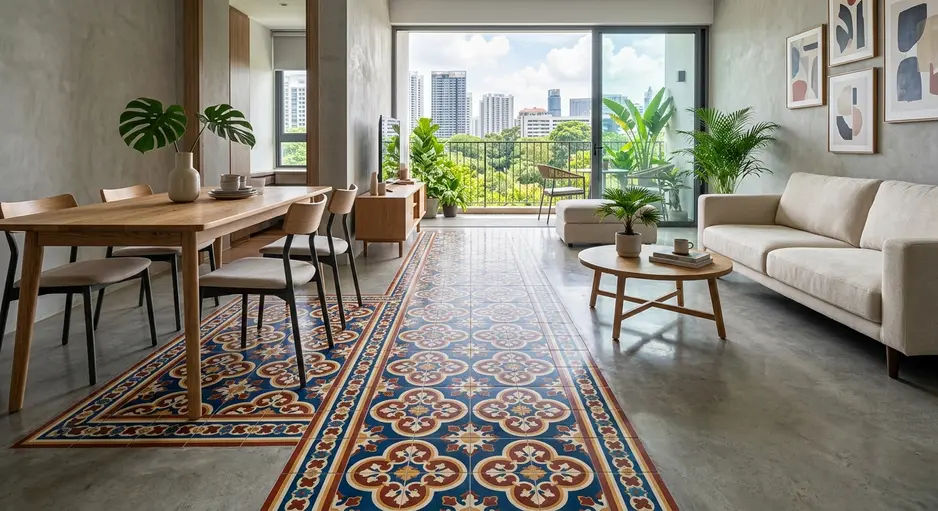
What makes handmade Athangudi tiles different?
Traditional Athangudi tiles are produced by hand using materials such as cement, sand, pigments, and moulds. The tiles are formed and cured rather than decorated with a digital surface print. Exact materials and production methods can differ, so buyers should always ask the manufacturer for process details.
Small changes in shade, line, and surface are normal in handmade Athangudi tiles. These differences give the floor its artisan character. By comparison, mass-produced printed tiles tend to have more uniform colours and repeated surface graphics.
This handcrafted quality makes artisan cement tiles attractive to people who want traditional Indian flooring with a personal feel. It also means that physical samples and realistic expectations are essential before ordering.
Heritage character for contemporary interiors
Athangudi tiles Singapore buyers choose often suit shophouses, landed homes, tropical interiors, and hospitality projects. Their strong patterns can complement timber, rattan, limewash walls, and restored architectural details.
However, Athangudi and Peranakan tiles are not the same product. They come from different cultural and production traditions. Designers can use them within the same broad heritage-inspired style, but they should not describe one as the other.
Why do they fit 2026 flooring trends?
Interior flooring trends for 2026 are likely to favour warm terracotta, sage green, ochre, burgundy, muted blue, and creamy neutrals. Patterned floors may also be used as visual “rugs” within simple rooms. This approach brings detail to the floor without making every surface compete for attention.
Interest in handcrafted cement tiles also reflects a move away from perfectly uniform finishes. Buyers increasingly value visible craft, adaptable heritage design, and materials that can age with character when properly maintained.
8 Top Athangudi Tile Patterns for 2026
1. Floral medallions with heritage appeal
Floral Athangudi patterns often feature rosettes, petals, and large repeating medallions. They work well in dining rooms, verandas, entrances, and boutique hospitality spaces. Muted burgundy, mustard, cream, and forest green can create a rich look without appearing too bright.
These are among the best Athangudi tiles for heritage homes because their balanced forms suit traditional architecture. A plain edge or border can help a detailed floral floor feel complete.
2. Colorful geometric tile patterns
Diamonds, cubes, interlocking lines, and repeating polygons offer a sharper look. These Athangudi tile designs can add energy to kitchens, cafés, foyers, and compact feature areas.
In smaller Singapore interiors, limit the design to two or three coordinated colours. Terracotta with ivory or deep blue with off-white can provide definition without making the room feel crowded.
3. Star and compass designs
Eight-point stars and compass-style motifs create a strong focal point. They are ideal for entrance halls, courtyards, and central zones where the full pattern remains visible.
Use a simple border around a radial design. This gives the motif a clear endpoint and makes transitions to timber, stone, or plain cement Athangudi tiles easier to manage.
4. Updated checkerboard floors
Checkerboard flooring is moving beyond plain black and white. Softer combinations such as terracotta and ivory, sage and cream, burgundy and beige, or blue and warm white feel fresh yet familiar.
This is one of the most flexible choices among the top trending Athangudi tiles in Singapore. It can suit a conserved property, minimalist apartment, modern kitchen, or relaxed dining area.
5. Border-and-field floor rugs
A border-and-field layout uses decorative Athangudi tiles to frame a central pattern. It creates the effect of a permanent floor rug and can define a dining or reception zone without adding walls.
Careful measurements are vital. The border should meet corners cleanly, while the central field needs to remain balanced. Long corridors may benefit from repeated panels rather than one stretched layout.
6. Botanical vines and organic motifs
Leaves, creepers, lotus forms, and flowing lines support the interest in biophilic design. Their softer shapes pair well with indoor plants, timber furniture, rattan, and warm neutral walls.
These patterns feel especially suitable for tropical Singapore homes. Dusty green, sand, brown, and muted yellow can make botanical tiles easy to coordinate with natural materials.
7. Monochrome lattice patterns
Black, charcoal, beige, and off-white lattices offer a quieter take on decorative flooring. They are practical Athangudi tile patterns for modern interiors where a multicoloured floor may feel too strong.
Use them in condominium kitchens, powder rooms, retail spaces, or entrance zones. A medium-scale repeat usually provides enough visual movement while keeping the overall room restrained.
8. Mosaic-style patchwork flooring
Mosaic style flooring combines several coordinating motifs in one layout. It can work well in restaurants, boutiques, cafés, and creative offices where the floor supports a memorable brand experience.
The result should look curated rather than random. Keep a consistent base colour across the vintage floor tile designs, or repeat selected motifs at planned intervals to connect the composition.
Which Pattern Is Best for Your Space?
Heritage houses and conserved properties
Floral medallions, stars, borders, and warm traditional colours can complement older architecture. Study the scale, period, and existing materials of the building before choosing a motif.
For a conserved Singapore property, check current Urban Redevelopment Authority requirements and consult qualified conservation professionals. A visually suitable tile does not remove the need for renovation approval or appropriate building methods.
HDB flats and condominiums
Smaller repeats, monochrome lattices, and restrained checkerboards tend to be easier to use in compact rooms. A patterned entrance, kitchen, or dining zone can provide impact without covering the whole home.
Confirm current HDB or condominium management rules before work begins. The contractor should also check the substrate, finished floor height, door clearance, and transitions to nearby surfaces.
Restaurants, hotels, and retail projects
Geometric, patchwork, and border layouts can help define a commercial identity. Yet Athangudi tiles for residential and commercial projects cannot be selected on appearance alone.
Commercial buyers should request relevant information on abrasion, slip resistance, water absorption, sealing, and cleaning. Keeping spare tiles from the same production batch can also simplify future repairs.
What works in a small Singapore room?
Choose a smaller repeat or a medium-contrast palette. Very large motifs may be difficult to read when cabinets and furniture cover much of the floor. Use wide decorative borders carefully in narrow spaces, as they can reduce the apparent size of the room.
Athangudi Tiles vs Terrazzo and Encaustic Tiles
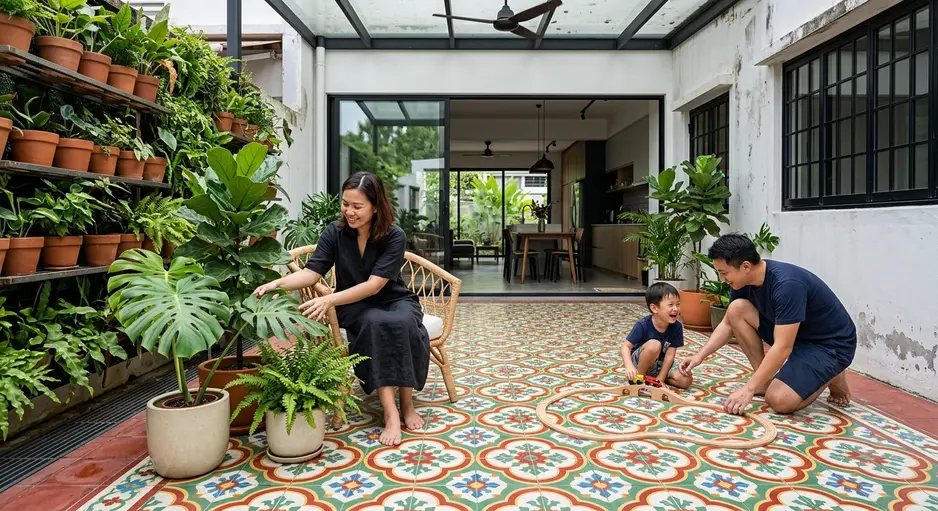
Are Athangudi tiles the same as encaustic cement tiles?
The terms are sometimes mixed in retail descriptions, but they do not always refer to the same production tradition or tile construction. Encaustic cement tiles commonly use coloured cement layers to form a pattern, while Athangudi tiles are associated with a specific regional craft.
Ask how the tile is made, how many layers it has, how it is cured, and whether its pattern is formed within the surface or printed on top. The production description is more useful than a broad product label.
Athangudi tiles vs terrazzo tiles
- Appearance: Athangudi flooring usually features floral or geometric motifs. Terrazzo has an aggregate or stone-chip look.
- Variation: Handmade tiles show artisan variation. Terrazzo may have a more controlled finish, depending on its format.
- Design role: Athangudi patterns create focal floors. Terrazzo often supports minimalist or continuous interiors.
- Maintenance: Both materials need care suited to their formulation, finish, and location.
- Selection: Athangudi suits pattern-led spaces, while terrazzo suits buyers seeking visual texture without repeated motifs.
Neither material is universally better. Durability and upkeep depend on manufacturing quality, substrate preparation, installation, finish, traffic, and regular maintenance.
Are Athangudi Tiles Suitable for Singapore’s Climate?
Benefits of Athangudi tiles
The main benefits of Athangudi tiles include a handcrafted appearance, broad design choice, and compatibility with both heritage and contemporary rooms. Individual tiles may also be replaced if suitable spare stock is retained.
Premium Athangudi tiles should be assessed through samples, process information, and technical details rather than price or appearance alone. Natural variation can be desirable, but poor curing or inconsistent dimensions may affect installation.
Porosity, humidity, and sealing
Cement-based tiles can be porous and generally require a compatible sealing system. Singapore’s humid climate makes proper substrate preparation, curing, waterproofing, and ventilation especially important.
Descriptions such as low-maintenance cement tiles should be treated with care. The floor can be manageable when correctly installed and sealed, but it still needs suitable cleaning and periodic inspection.
Can Athangudi floor tiles be used in wet areas?
They may be suitable for certain wet areas, but this must be confirmed for the specific product and application. Request information about slip resistance, water absorption, surface finish, sealer compatibility, waterproofing, and cleaning.
Avoid polished or untested Athangudi floor tiles on frequently wet floors. Bathrooms and commercial wash areas need advice from the supplier, designer, waterproofing contractor, and installer.
How to Install and Maintain Handmade Tiles
Order and assess physical samples
- View several tiles rather than relying on one sample.
- Compare colour variation, edges, thickness, and surface quality.
- Check how adjoining motifs align.
- Test the proposed sealer on a sample.
- Assess colours in daylight and artificial light.
Dry-lay the complete pattern
Arrange the tiles before fixing them. This helps distribute shade variation and confirms motif direction, borders, centre lines, and room transitions. Photograph the approved arrangement so the installer has a clear reference.
Use an experienced cement-tile installer
The substrate should be level, clean, stable, and suitable for the chosen adhesive. Confirm that the adhesive, grout, sealer, and cleaner are compatible with the tile. Acid-based cleaning can damage cement surfaces unless the manufacturer explicitly approves it.
Protect the completed floor while other renovation work continues. Dust, paint, tools, and heavy site traffic can mark an unprotected surface.
How much extra material should you order?
Allow additional tiles for cuts, pattern matching, shipping damage, installation breakage, and future repairs. The right quantity depends on room shape, motif direction, border complexity, and shipment method. Diagonal layouts and detailed borders usually require more planning than straight patterns.
How should the floor be cleaned?
Use a pH-neutral cleaner approved for sealed cement surfaces. Wipe spills promptly and avoid harsh acids, bleach, abrasive pads, or aggressive scrubbing. Inspect the sealer periodically, as no single resealing schedule suits every room and product.
Choosing an Athangudi Tile Manufacturer or Exporter
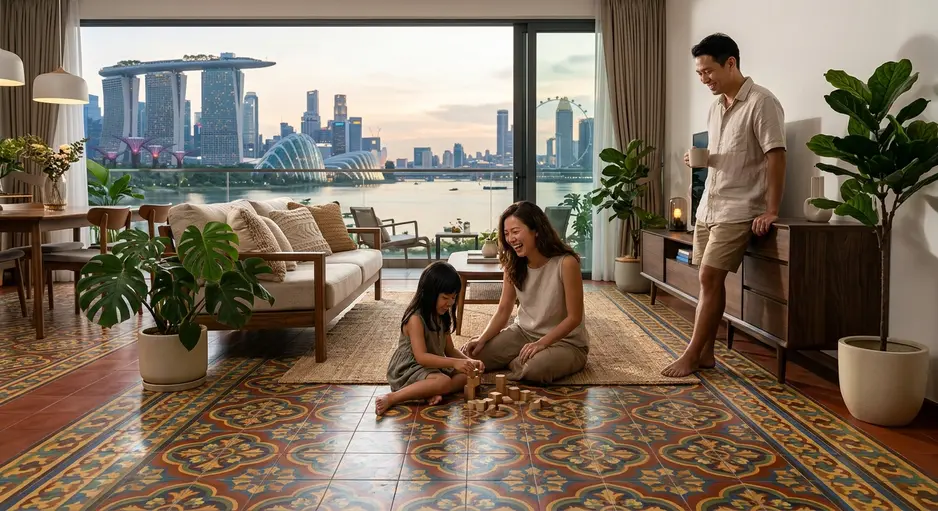
Questions to ask before importing
- Are the tiles handmade or mechanically pressed?
- Can the production method and materials be explained?
- Are custom colours, sizes, and border designs available?
- What technical test information is provided?
- What production and curing time should be allowed?
- How are the tiles packed for international transport?
- How are shortages, damage, and replacement orders handled?
- Which shipping terms and export documents are included?
- Is installation, sealing, and maintenance guidance available?
An experienced Athangudi tiles exporter to Singapore should help buyers calculate field tiles, borders, corners, and spare stock. A reliable international Athangudi tile supplier should also explain handmade variation clearly and provide enough information for project planning.
Sourcing from Harsha Tiles
Harsha Tiles is an Athangudi tile manufacturer that buyers can contact when exploring patterns and project requirements. Before confirming an order, discuss the intended room, installation conditions, quantity, pattern layout, packing needs, and destination.
Request physical samples, pattern options, technical information, packing details, and a project-specific export quotation before finalising your Singapore order. Buyers should verify current product availability and export terms directly through Harsha Tiles.
Do not choose a supplier on price alone. Samples, documentation, communication, quality control, and replacement planning all affect the final result.
Top Athangudi Tiles Patterns in Singapore
Choose a Pattern That Fits the Whole Project
The leading 2026 directions are clear: heritage florals, structured geometrics, and restrained modern colourways. Yet the best pattern depends on room size, traffic, lighting, moisture exposure, and architectural character.
Shortlist several designs, inspect physical samples, and confirm installation needs before ordering. For pattern options and export planning, contact Harsha Tiles with your room measurements, intended application, and preferred palette. A sample-led decision will help create a floor that feels distinctive, balanced, and appropriate for its Singapore setting.
Frequently Asked Questions
1. What are Athangudi tiles made of?
They are generally made with cement, sand, pigments, moulds, and a curing process. Exact formulations and tile layers can vary between manufacturers, so request product-specific details.
2. Are Athangudi tiles suitable for Singapore homes?
Yes, they can be suitable when selected for the intended location and professionally installed, sealed, and maintained. Wet zones and high-traffic areas need extra technical checks.
3. Do Athangudi tiles need sealing?
Most decorative cement tiles benefit from an appropriate sealer. Confirm the system with the tile manufacturer and installer, and test it on a sample first.
4. Are Athangudi tiles slippery?
Slip performance depends on the surface, sealer, cleaning method, wear, and exposure to water. Request relevant test information for bathrooms, entrances, kitchens, and commercial floors.
5. How can you identify genuine handmade tiles?
Look for process transparency, manufacturer details, physical samples, and small handmade variations. Ask whether the pattern is formed during production or digitally printed onto the surface.

Whatsapp Chatx
Hi! Click one of our representatives below to chat on WhatsApp or send us email to info@harshatiles.in
 |
Mr Saleem +91 82702 80707 |
|
Mr Subramanian +91 96265 57655 |
 Design Your Dream Home