Aug 06, 2026
Connect With Our Team

Are Full Body Tiles the Most Durable Flooring Option?
Floors in busy spaces face more than footsteps. They must handle trolley wheels, dust, moisture, spills, daily cleaning, and the occasional impact. Choosing the wrong material can lead to visible wear, chips, or expensive repairs.
Full body tiles are among the most durable flooring tiles for areas with heavy foot traffic. Their dense construction and through-body composition help make wear less visible. However, they are not automatically right for every factory or warehouse. Abrasion, strength, water absorption, slip resistance, substrate condition, and installation quality must all be considered.
Are Full Body Tiles the Most Durable Flooring Option?
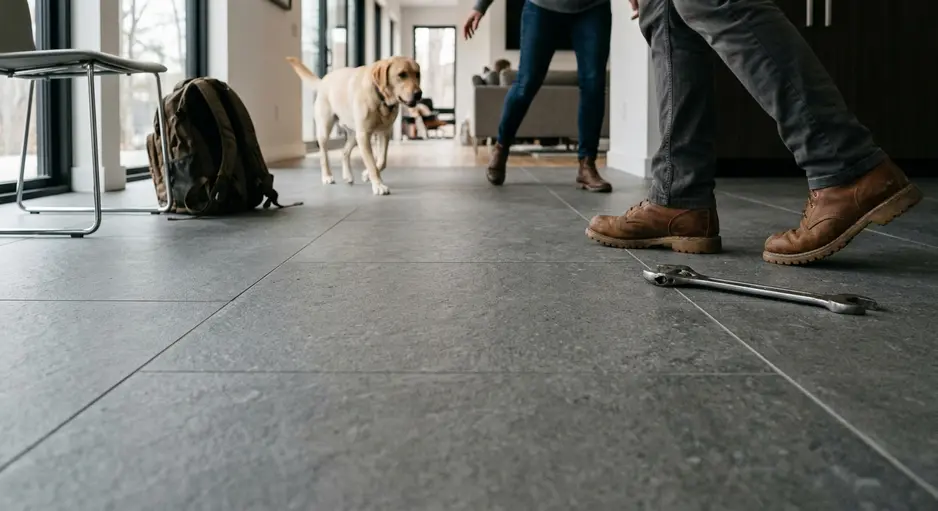
These tiles are often chosen for shopping malls, airports, hotel lobbies, retail stores, office corridors, and public buildings. Their dense body can withstand regular pedestrian movement, rolling luggage, cleaning machines, and routine maintenance when the product is correctly specified.
The through-body appearance is a key benefit. Unlike a tile that relies mainly on a decorative surface, minor wear does not expose a sharply different layer underneath. This helps the floor retain a more consistent look over time.
When another flooring system may be better
“Most durable” depends on how a floor will be used. Repeated metal impacts, heavy machinery, strong chemicals, vibration, or concentrated forklift loads create different risks from normal foot traffic.
Specialised resin, reinforced concrete, engineered stone, or another industrial system may perform better under severe conditions. Structural movement and poor subfloor support can also crack even high-quality heavy-duty floor tiles.
What Are Full Body Porcelain and Vitrified Tiles?
Through-body composition explained
In a full body product, pigments and materials continue through the tile rather than appearing only in a thin surface coating. The visible face and the material below it remain similar in tone and composition. This makes deep wear and small edge chips less obvious.
Terminology can vary between manufacturers and markets. Buyers should not depend on the “full body” label alone. Product data should confirm water absorption, breaking strength, abrasion resistance, dimensions, finish, and intended use.
Full body porcelain tiles vs vitrified tiles
The terms full body porcelain tiles and full body vitrified tiles often overlap in commercial use. Both usually describe dense products fired at high temperatures to create a compact, low-porosity body.
Porcelain classifications commonly use a water absorption benchmark of 0.5% or less, depending on the applicable standard. ISO 10545-3 is used to test water absorption. Buyers should check the product report rather than assume that every tile sold under a similar name has equal performance.
Are chips and scratches invisible?
No. Scratch-resistant porcelain tiles can still be marked, especially by sand, metal objects, or harsh maintenance tools. They can also chip after a strong impact. The advantage is that damage usually creates less visual contrast than it would on a surface-glazed product.
What Makes Full Body Tiles So Durable?
Resistance to deep abrasion
Abrasion occurs when footwear, grit, trolley wheels, or cleaning equipment gradually removes material. In busy areas, this process can dull a floor or create visible traffic paths.
ISO 10545-6 measures deep abrasion resistance for unglazed ceramic tiles. It is often more useful for evaluating through-body products than relying only on PEI ratings, which relate to the surface abrasion of glazed tiles. Good abrasion-resistant floor tiles should have test data suited to their intended traffic level.
Low water absorption
Low water absorption tiles limit moisture penetration into the body. This supports their use in spaces that are cleaned often and in locations exposed to occasional spills. A dense body can also improve stain resistance, although grout and surface finish still affect maintenance.
Low absorption does not automatically make a product suitable for every outdoor setting. For freezing climates, frost resistance should be verified separately under a test such as ISO 10545-12.
Breaking strength and load resistance
Surface hardness is not the same as structural strength. ISO 10545-4 assesses modulus of rupture and breaking strength. Tile thickness, dimensions, adhesive coverage, subfloor stability, and movement joints all influence real-world performance.
A strong tile can crack when installed over an uneven, hollow, or moving base. Large formats need careful substrate preparation because gaps beneath the tile can create weak points under concentrated loads.
Slip, stain, and chemical performance
A polished floor can resist wear yet become unsafe when wet. Entrances, food courts, wash areas, and industrial work zones may need matt or textured anti-slip commercial flooring. Slip data should be reviewed using an applicable method, such as ANSI A326.3 or a destination-market requirement.
Where oils, cleaning agents, or industrial chemicals are present, request chemical-resistance results under ISO 10545-13. No single durability rating covers every risk.
Technical evidence worth requesting
-
Water absorption: ISO 10545-3
-
Breaking strength: ISO 10545-4
-
Deep abrasion: ISO 10545-6
-
Slip resistance: Applicable DCOF or local rating
-
Frost resistance: ISO 10545-12 where required
-
Chemical resistance: ISO 10545-13
Full Body Tiles vs Other Flooring Options
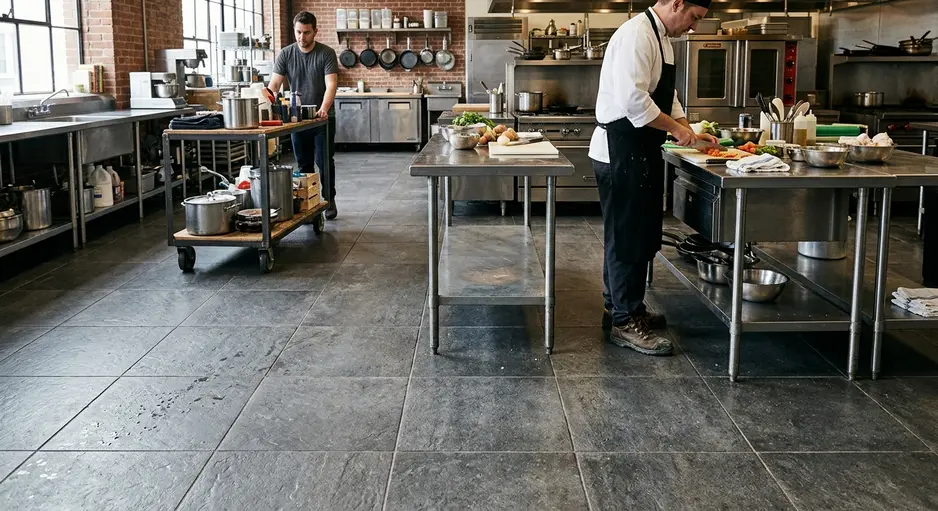
Full body tiles vs double charge tiles
Double charge tiles have a decorative upper layer made with two layers of material. This surface is deeper than a basic printed glaze and can perform well in retail, institutional, and other commercial areas.
However, the decorative layer does not continue through the full tile thickness. Through-body products generally conceal deep abrasion and chips better. Double charge tiles may offer a useful balance of cost, appearance, and wear resistance where conditions are demanding but not extreme.
Full body tiles vs glazed vitrified tiles
Glazed vitrified tiles provide a broad choice of patterns, colours, and finishes because their appearance is created on the surface. This makes them popular in homes, offices, and moderate-traffic commercial interiors.
If the glaze is deeply scratched or chipped, the tile body beneath may become more visible. Through-body products offer less surface-to-body contrast, making them attractive as commercial flooring tiles in areas where long-term wear matters more than detailed printed patterns.
Natural stone, concrete, and resin
Natural stone performance varies by material. Granite, marble, limestone, and other stones have different levels of hardness, porosity, and maintenance needs. Some require sealing or periodic refinishing.
Concrete can support substantial loads, but it may crack, stain, or create dust unless it is properly designed and treated. Resin systems can suit chemical exposure and heavy industry, although they need specialist preparation and installation.
High-density vitrified tiles offer consistent sizing, simple routine care, and a uniform finish. They are often a practical choice where appearance and resistance to pedestrian wear carry equal importance.
Where Do Full Body Tiles Perform Best?
Shopping malls and airports
Shopping mall floor tiles must cope with steady foot traffic, dirt carried in from outdoors, carts, and cleaning machines. Airport flooring solutions face similar pressure from luggage wheels and large crowds. Dense through-body products are among the best tiles for heavy foot traffic because abrasion is less likely to create a contrasting surface.
Finish selection remains important. Entrances and food zones may be exposed to rain, grease, or spills, so an attractive polished surface may not provide the required slip resistance.
Hotels, hospitals, offices, and retail spaces
Corridors, lift lobbies, receptions, and showrooms need flooring that looks clean after frequent use. Premium full body tiles can combine a consistent appearance with practical maintenance. In hospitals and food-related spaces, grout selection and cleaning procedures also affect hygiene.
Commercial projects should keep spare stock from the original batch. This improves the chance of a close shade and size match if future repairs become necessary.
Warehouse and factory floors
Full body products can work as warehouse flooring tiles or factory floor tiles in selected light- and medium-duty settings. The specification must account for pallet movement, trolley wheels, oils, cleaning chemicals, and local point loads.
Forklifts, dropped metal parts, machinery vibration, and heavy racks create greater risk. Industrial floor tiles should be selected by load and impact requirements, not appearance alone. A floor engineer may recommend resin or reinforced concrete for severe operations.
How to Choose Durable Flooring Tiles
Match the product to traffic and load
- Estimate daily pedestrian traffic and peak periods.
- Identify carts, luggage, forklifts, or concentrated equipment loads.
- Check whether the floor will be wet, oily, or chemically exposed.
- Select a suitable format, thickness, surface texture, and grout joint.
- Request abrasion and breaking-strength reports.
- Confirm slip resistance for the expected conditions.
- Review substrate, adhesive, and movement-joint requirements.
Do not judge durability by thickness alone
A thicker tile is not always the stronger choice. Composition, firing quality, dimensions, test results, and installation support all matter. A well-tested product installed over a solid base may outperform a thicker tile with hollow areas underneath.
Installation practices that prevent cracking
- Prepare a level, clean, and structurally stable substrate.
- Use an adhesive suited to the tile, format, and location.
- Achieve adequate and even adhesive coverage.
- Provide perimeter and movement joints where needed.
- Use grout suited to moisture and chemical exposure.
- Protect the floor from traffic until curing is complete.
- Follow product guidance and applicable installation standards.
Maintenance that protects the finish
Entrance mats reduce sand and grit that can act like abrasives. Clean spills promptly and avoid harsh acidic products unless approved for the tile and grout. Damaged grout should be repaired before water or dirt enters the joints.
How Should You Evaluate a Manufacturer or Supplier?
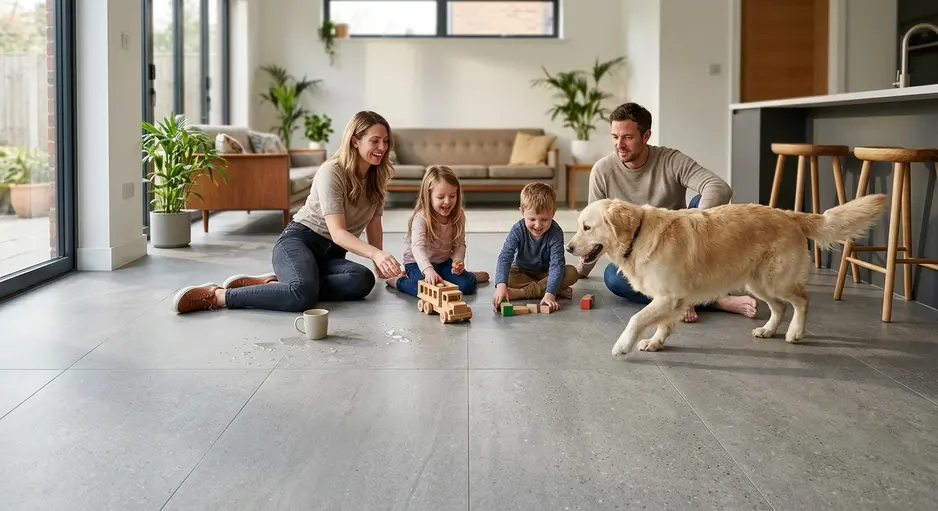
Ask for verifiable technical data
A responsible full body tiles manufacturer should help buyers compare products through evidence rather than broad claims. Request reports for water absorption, breaking strength, deep abrasion, dimensional tolerance, stain resistance, chemical resistance, and slip performance.
Commercial buyers should also confirm batch details, shade variation, packing information, available sizes, and intended applications. These factors are important when sourcing durable porcelain flooring for commercial spaces.
Checks for international buyers
- Compliance with standards in the destination market
- Consistency between samples and production batches
- Export packing and pallet specifications
- Sample availability and documented lead times
- Quality-control and claims procedures
- Loading details and required shipping documents
Architects, contractors, and distributors can explore Harsha Tiles or contact its team through the provided website to discuss full body tile specifications, formats, finishes, and project requirements. Verify product data and supply terms directly before placing an order.
Final Verdict
Full body tiles are among the most durable porcelain flooring choices for commercial and high-traffic settings. Their dense construction, low porosity, and through-body appearance help them resist visible wear while keeping maintenance manageable.
They are not indestructible, and they are not the answer to every industrial challenge. The best result comes from matching verified abrasion, strength, slip, and chemical data to the site. With a stable substrate, correct installation, and sensible maintenance, these tiles can deliver a dependable and long-lasting floor.
Frequently Asked Questions
1. Are full body tiles completely scratch-proof?
No tile is completely scratch-proof. Dense porcelain can offer strong abrasion resistance, but sand, metal, and improper cleaning tools may still leave marks. Through-body colour helps make minor scratches and chips less noticeable.
2. Are they suitable for heavy foot traffic?
Yes, when supported by suitable abrasion, strength, and slip test results. They are commonly considered for malls, airports, hotels, offices, retail corridors, and public buildings with frequent pedestrian movement.
3. Can they be used for industrial flooring?
They can suit selected light- or medium-duty industrial spaces. Forklift loads, vibration, aggressive chemicals, and repeated impacts require a detailed assessment. Severe operations may need concrete, resin, or another engineered system.
4. Are full body tiles better than double charge tiles?
They usually conceal deep wear better because the composition continues through the tile. Double charge products can still provide good durability and value for many commercial areas, especially where impact and abrasion levels are moderate.
5. Are full body porcelain tiles slippery?
Slip resistance depends mainly on the finish and surface conditions. Polished products may become slippery when wet. Matt, structured, or tested anti-slip finishes are often better for entrances, wet areas, and food-service spaces.

Whatsapp Chatx
Hi! Click one of our representatives below to chat on WhatsApp or send us email to info@harshatiles.in
 |
Mr Saleem +91 82702 80707 |
|
Mr Subramanian +91 96265 57655 |
 Design Your Dream Home