Aug 06, 2026
Connect With Our Team

Small Tiles vs Large Tiles: Which is Best for Each Room?
Choosing between small tiles, large tiles can shape the entire look and feel of your space. From compact bathrooms to expansive living rooms, tile size plays a key role in both design and function. If you’ve ever wondered about the real difference in small tiles vs large tiles, this guide breaks it down in a simple, practical way.
We’ll explore where each tile size works best, what professionals recommend, and how to avoid common mistakes. Whether you’re renovating a home or planning a commercial project, this tile size guide for each room will help you make a confident choice.
Understanding Small Tiles vs Large Tiles

What qualifies as small tiles, standard tiles, and large format tiles
Tile sizes vary widely, but they are generally grouped into three categories:
-
Small tiles: Up to 300x300 mm tiles
-
Standard tiles: 300x300 mm to 600x600 mm tiles
-
Large format tiles: 600x600 mm tiles and above, including slabs
Tile size comparison
-
300x300 mm ≈ 12x12 inches
-
600x600 mm ≈ 24x24 inches
-
1200x600 mm ≈ 48x24 inches
-
1600x800 mm ≈ 63x32 inches
This quick tile size comparison helps visualize how different formats will look in your space.
Porcelain vs ceramic tile sizes and applications
Both porcelain and ceramic tiles come in multiple sizes, but porcelain is more common in larger formats. It is denser and works well for large porcelain slab kitchen floor designs and high-traffic areas. Ceramic tiles are often used in smaller sizes for walls and decorative patterns.
Visual effect of tile size on room perception
The size of a tile can change how big or small a room feels. Large tiles create fewer visual breaks, making rooms appear more open. Small tiles add texture and detail, which can make a space feel cozy but sometimes busier.
Pros and Cons of Small Tiles
Benefits of mosaic tiles in bathrooms and wet areas
Mosaic small tiles for shower floor applications are popular for a reason. Their multiple grout lines improve grip and reduce slipping. They also allow better water drainage in wet areas.
Anti-slip small floor tiles for shower floors
Small anti-slip tiles are ideal for wet zones because they naturally provide more traction. This makes them a safe choice for bathrooms, especially for families and elderly users.
Small tiles for curved surfaces, niches, and backsplashes
Small tiles are flexible and easy to install on curved walls, niches, and tight corners. Designs like small subway tiles backsplash design remain timeless and versatile.
Grout lines
More grout lines mean better grip and flexibility. However, they also require more cleaning. The debate around grout lines small vs large tiles often comes down to maintenance preferences.
Cleaning effort and grout maintenance
-
More grout lines to clean
-
Higher maintenance over time
-
Can make small spaces feel cluttered
Pros and Cons of Large Tiles
Large format vs standard tiles
Large format vs standard tiles mainly differ in size and visual impact. Large tiles create a seamless appearance, while standard tiles offer more layout flexibility.
Jointless large format porcelain slabs for modern interiors
Jointless large format porcelain slabs are widely used in modern homes. They reduce grout visibility and create a sleek, continuous surface.
Fewer grout lines
With fewer joints, large tiles are easier to clean and maintain. This makes them a great option for living rooms and kitchen tiles.
Tile installation tips for large tiles
-
Ensure a perfectly level subfloor
-
Use tile leveling systems
-
Apply the right adhesive evenly
-
Handle with care to avoid breakage
Cutting, handling, and installation cost
-
Requires skilled labor
-
Higher installation cost
-
More difficult to cut and transport
Best Tile Size for Each Room
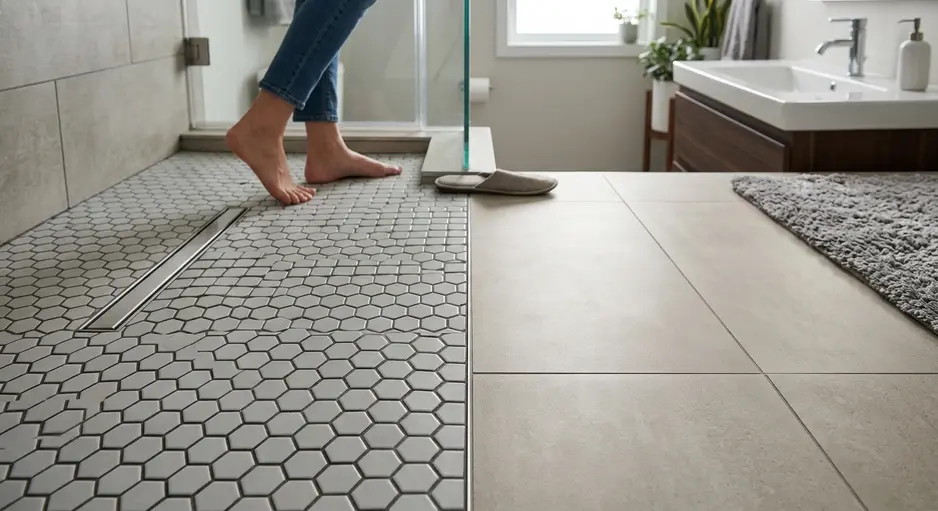
Best tile size for small bathroom
The best tile size for small bathroom spaces depends on design goals. Large tiles can make the room appear bigger, while small tiles work better for floors due to slip resistance.
Mosaic small tiles for shower floor
Mosaic tiles are the top choice for shower floors. They improve safety and adapt easily to slopes for proper drainage.
Large format tiles for living room
Large format tiles for living room areas create a clean and spacious look. They are perfect for open-plan homes and modern interiors.
Large porcelain slab kitchen floor vs standard tiles
A large porcelain slab kitchen floor offers fewer joints and easier cleaning. Standard tiles, however, may be more budget-friendly and easier to install.
Small subway tiles backsplash design trends
Subway tiles remain a favorite for kitchen backsplashes. They work well in both classic and modern kitchens and allow creative patterns.
Outdoor and commercial project large format tiles
For commercial space, large format tiles, durability and low maintenance are key. Large tiles reduce joints and improve visual consistency in high-traffic areas.
Grout Lines Small vs Large Tiles
Grout joint width recommendations by tile size
-
Small tiles: 2–3 mm grout joints
-
Large tiles: 1.5–2 mm grout joints
Impact on maintenance and cleaning
More grout lines mean more cleaning effort. Large tiles simplify maintenance, while small tiles require regular grout care.
Aesthetic differences
Large tiles offer a minimal look, while small tiles add texture and detail. The choice depends on your design preference.
Tile Installation and Maintenance Insights
Tile cutting and installation tools required
-
Tile cutter or wet saw
-
Spacers and leveling clips
-
Adhesive trowels
Subfloor preparation for large-format tiles
A flat and stable base is critical for large tiles. Even minor unevenness can cause cracks or lippage.
Maintenance of large tiles vs small tiles
Maintenance of large tiles vs small tiles differs mainly in grout care. Large tiles are easier to clean, while small tiles need more frequent attention.
Common installation mistakes to avoid
-
Uneven subfloor
-
Incorrect adhesive use
-
Poor grout application
Expert Tips for Choosing the Right Tile Size
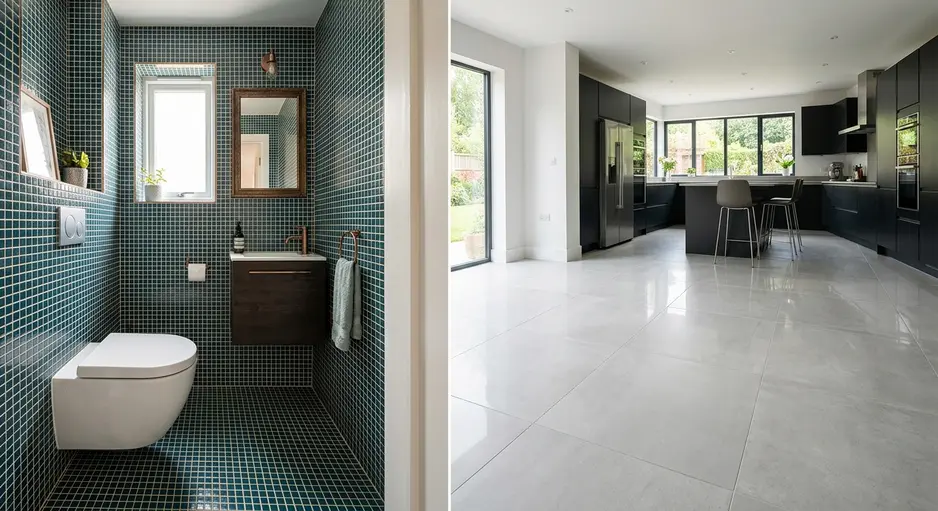
Architect tile selection guide
Professionals consider room size, lighting, and layout before choosing tile size. Large tiles suit open areas, while small tiles work for detailed spaces.
Tile layout patterns for large tiles
-
Stacked pattern for modern look
-
Staggered pattern for subtle variation
-
Diagonal layout for visual interest
How tile size affects perceived room size
Larger tiles make rooms feel bigger, while smaller tiles create a detailed, textured appearance.
Budget considerations and material wastage
Large tiles may cost more upfront but reduce grout and maintenance costs. Small tiles are often more affordable but may increase labor expenses.
Where to Buy Quality Tiles in India
Choosing a reliable tile wholesaler
Look for a trusted tile wholesaler that offers a wide range of sizes and finishes.
Large tiles exporter from India
A reliable large-format tiles exporter from India can support global demand, including export ceramic tiles from India to global markets.
Bulk tiles supplier India for residential and commercial projects
A dependable bulk tiles supplier in India ensures consistent quality and timely delivery for large projects.
Porcelain small tile manufacturers in India
Porcelain small tile manufacturer in India offer durable and stylish options for bathrooms and kitchens.
Explore Tile Size Options for Modern Interiors
Conclusion
The choice between small tiles, large tiles depends on your space, design vision, and maintenance preferences. Use small tiles where safety and detail matter, and large tiles where you want openness and simplicity. A balanced approach often delivers the best results. For premium collections across sizes and styles, explore Harsha Tiles.
FAQs
1. Are large tiles better for small spaces?
Yes, large tiles can make small spaces appear bigger by reducing visual breaks.
2. What is the best tile size for a small bathroom floor?
Small tiles or mosaics are ideal due to better grip and drainage.
3. Do small tiles require more maintenance than large tiles?
Yes, because they have more grout lines that need cleaning.
4. Are large format tiles harder to install?
Yes, they require skilled installation and proper tools.
5. Which tiles are best for anti-slip shower floors?
Small mosaic tiles are the safest option for wet areas.
6. How do I choose between porcelain and ceramic tile sizes?
Porcelain is better for large formats and high-traffic areas, while ceramic works well for smaller applications..
7. Can large tiles be used on walls and backsplashes?
Yes, large tiles can create a seamless and modern look on walls and backsplashes.


Whatsapp Chatx
Hi! Click one of our representatives below to chat on WhatsApp or send us email to info@harshatiles.in
 |
Mr Saleem +91 82702 80707 |
|
Mr Subramanian +91 96265 57655 |
 Design Your Dream Home