Oct 07, 2026
Connect With Our Team

Rustic vs Matt Tiles: Best Choice for South Indian Homes
Flooring in a South Indian home must handle more than daily foot traffic. Heat, humidity, monsoon rain, dust and frequent barefoot use all affect how a floor looks and feels. Yet conditions vary across Kerala, Tamil Nadu, Karnataka, Andhra Pradesh and Telangana.
When comparing rustic vs matt tiles, neither option is best for every room. Rustic surfaces add earthy character, while matt finishes offer low glare and broad design choice. The right tile depends on its location, texture, cleaning needs and verified safety rating.
Rustic vs Matt Tiles: What Is the Difference?
What are rustic tiles?
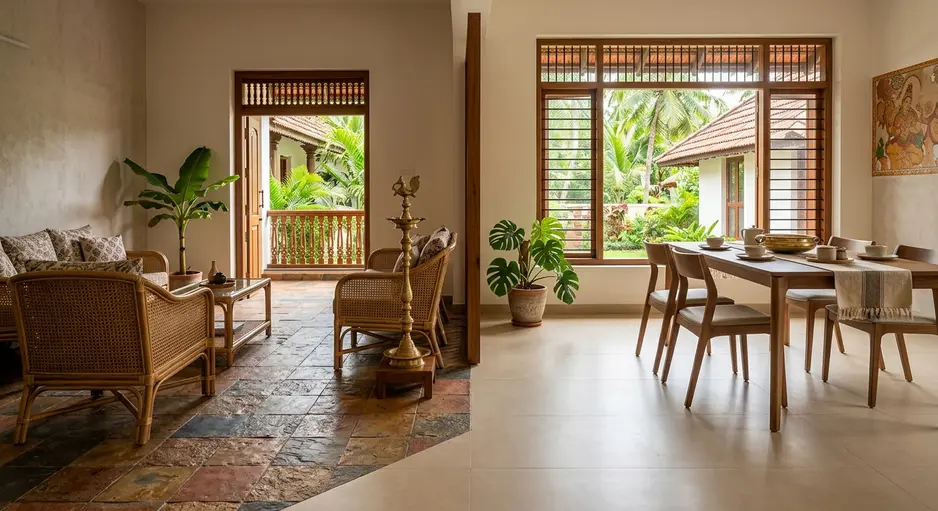
Rustic tiles are known for their natural, weathered character. They may recreate slate, terracotta, aged cement, timber or natural stone. An earthy surface texture and gentle colour variation can make each section of the floor look distinct.
Many rustic tile designs have irregular details or a textured face. These features work well with carved wood, brass décor and courtyard-inspired interiors. Pattern variation can also support scratch concealment and make small marks less obvious.
However, not every textured surface is easy to maintain. Deep grooves can trap dust, cooking residue and soap. The texture should suit the room and the owner’s cleaning routine.
What are matt tiles?
Matt tiles are defined by their low-reflective finish. They do not have the bright shine seen on polished flooring. Their softer appearance helps reduce glare from large windows and strong indoor lighting.
Matt tile designs can be plain, patterned, modern or stone-inspired. The surface may be smooth or lightly structured. They often show fewer water spots than highly polished finishes, although dark, plain colours can reveal pale dust and footprints.
Can a tile be both rustic and matt?
Yes. “Rustic” usually describes the appearance and surface character, while “matt” describes the level of sheen. A stone-look product with a weathered pattern and low sheen can be both rustic and matt.
This is why the choice is not always either-or. A rustic matt surface may give you a natural look without strong reflection.
Which Performs Better in South Indian Homes?
The practical difference depends on texture, colour and technical performance. The finish name alone does not tell you whether a product is suitable for a busy kitchen, wet bathroom or exposed balcony.
Appearance: Rustic surfaces have an earthy, aged or handcrafted feel. Matt surfaces have low sheen and may look modern, neutral or natural.
Surface: Rustic options are often textured or irregular. Matt options range from smooth to lightly textured.
Slip resistance: Either type may provide grip, but performance must be confirmed through test data.
Cleaning: Smooth matt floor tiles are usually easier to mop. Deeply textured rustic floor tiles may hold dirt in grooves.
Dirt visibility: Varied rustic patterns can conceal dust. Plain dark matt flooring may show pale residue or footprints.
Barefoot comfort: Smooth or gently textured surfaces usually feel better underfoot than rough finishes.
Common uses: Rustic products suit verandas, courtyards and traditional rooms. Matt options are versatile for living rooms, bedrooms and kitchens.
Do rustic tiles have better slip resistance?
Not automatically. Visible texture may help with traction, but appearance is not proof of safe wet performance. Ask for a documented DCOF result, R-rating, barefoot classification or another test relevant to the intended application.
ANSI A326.3, DIN 51130 and DIN 51097 are among the references used for tile-use and slip testing. The suitable classification depends on where and how the floor will be used. Drainage, slope, footwear, soap and oil also affect safety.
Are matt floor tiles easier to maintain?
Smooth or lightly structured matt flooring is often easier to clean than a deeply grooved rustic surface. Grout also matters. Wide joints and very pale grout can demand more attention in kitchens and entrances.
Best Tiles for Each Room
Living room flooring
Low sheen tiles create a calm base and reduce reflections from large windows. Neutral beige, ivory or soft grey can also make a compact apartment feel less busy.
Rustic floor tiles work well where the room includes wooden furniture, courtyard details or Athangudi-inspired colours. For a busy family area, confirm that the product has a suitable wear or abrasion rating.
Kitchen flooring
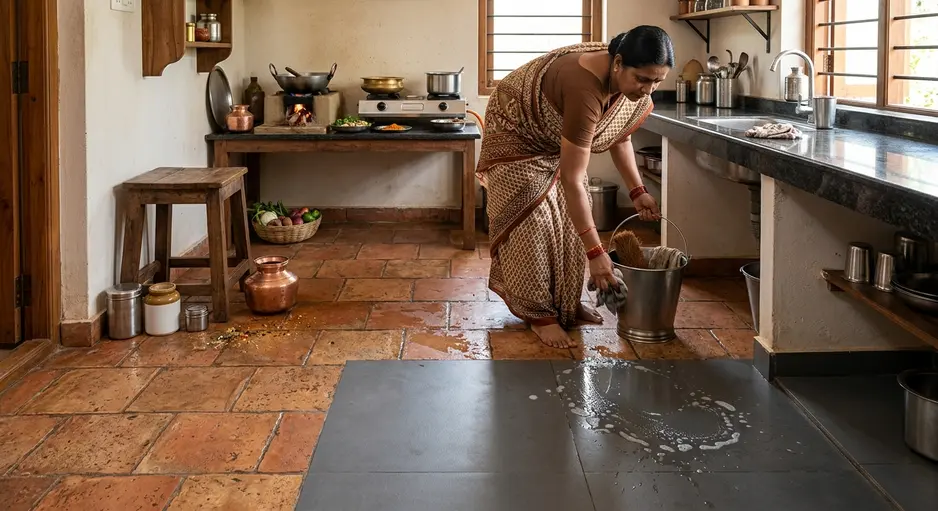
Kitchen flooring needs stain resistance, easy maintenance and suitable grip. A lightly textured matt surface is often more practical than a deeply grooved finish. Oil, flour and food residue can be harder to remove from heavy texture.
Mid-tone patterns tend to balance dirt visibility. Before buying, review the cleaning guidance and test common spills on a spare sample where permitted.
Bathroom flooring and moisture-prone areas
A matt finish does not automatically make a bathroom floor safe. Select a product approved for wet floors and check its barefoot slip classification. Water absorption and stain resistance are also important.
Smaller formats can help installers create the required slope towards the drain. Avoid overly uneven surfaces where soap and hard-water deposits may collect. Correct installation and drainage remain essential, even with slip-tested flooring.
Outdoor flooring, balconies and verandas
Rustic or textured floor tiles can suit verandas, patios, sit-outs and semi-open courtyards. Their natural stone appearance blends well with plants, timber and earthy exterior colours.
Do not assume that every textured product is approved for outdoor flooring. Confirm the manufacturer’s application guidance. Rain exposure, algae, drainage and regular cleaning can change how safe a surface feels over time.
Bedrooms and pooja rooms
Smooth matt surfaces offer good barefoot comfort in bedrooms. They also create a restful setting without harsh glare.
For pooja rooms, terracotta-look or stone-inspired rustic tiles can support traditional home aesthetics. Choose a moderate texture so the space remains simple to sweep and mop.
What Works Best in Hot and Humid Climates?
Matt tiles for humid South Indian climates
Humidity alone does not make one finish superior. Product density, water absorption and the approved application matter more than surface sheen. Frequent mopping and wet footprints also make verified grip important.
For coastal homes, choose flooring suited to the installation area and follow the recommended cleaning method. Avoid unsupported claims such as “completely waterproof” or “100% anti-skid.” Ceramic tile properties may be tested under the ISO 10545 series and applicable requirements such as IS 15622.
Heat-friendly flooring and barefoot comfort
Ceramic and porcelain floors often feel cooler than carpet and some resilient coverings. However, choosing rustic instead of matt will not dramatically reduce the room temperature.
A rough surface may become uncomfortable during long periods of barefoot use. Test a full-size sample underfoot rather than relying on a small display piece.
Climate-specific examples
- Kerala coastal home: Consider low-absorption matt flooring indoors and slip-tested textured products in semi-open spaces.
- Chennai apartment: Easy-clean matt flooring with low glare and fewer grout joints can suit compact rooms.
- Bengaluru or Hyderabad villa: Rustic stone-look flooring can add character to verandas, while smoother matt surfaces suit bedrooms and kitchens.
Rustic or Matt Tiles for Traditional Interiors?
Best rustic tiles for South Indian homes
Terracotta-inspired shades, slate effects and warm stone patterns pair naturally with timber, brass and woven décor. Brown, sand, red oxide, charcoal and weathered wood tones can bring warmth without needing real stone or timber maintenance.
Controlled pattern variation is important. Too many strong colours and textures in one room can look cluttered. Let the floor support the furniture rather than compete with it.
Best matt tiles for South Indian homes
Limestone, cement and soft marble-look designs suit both apartments and independent houses. Muted beige, ivory, grey and earthy green can form a quiet background for ornate furniture.
Large-format matt flooring can reduce the number of grout lines and create a more continuous look. The room size, subfloor condition and installation plan should guide the final format.
A practical strategy: combine both
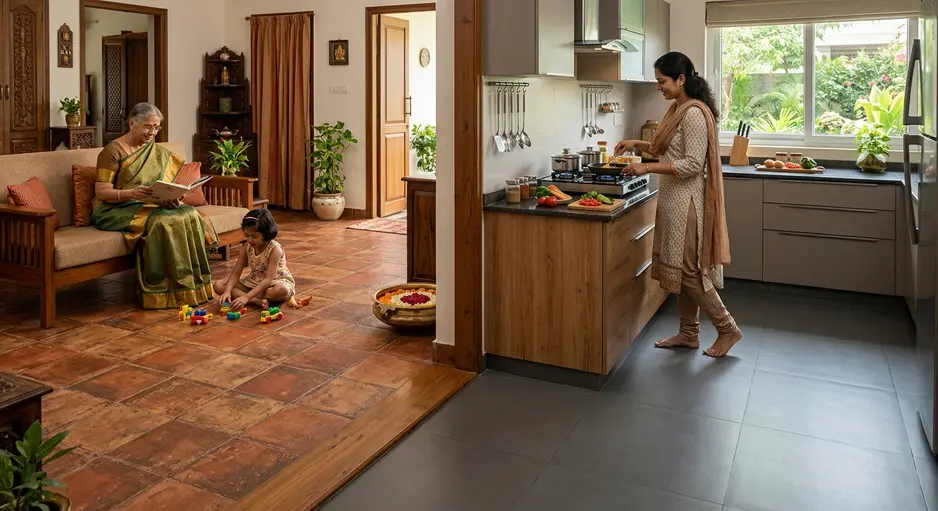
Use smooth matt flooring across large indoor areas, then add rustic tile designs in a foyer, pooja room, balcony or courtyard. Keeping the undertones consistent will help the spaces flow together.
How to Choose Safe, Durable Floor Tiles
Check specifications, not finish names
- Confirm whether the product is approved for floors, walls, indoor rooms, wet areas or outdoor use.
- Request the documented slip-resistance classification for the intended setting.
- Review water-absorption data for exposed and moisture-prone areas.
- Check wear or abrasion suitability for entrances and busy living rooms.
- Ask about stain resistance and approved cleaning products.
- Confirm shade, pattern and size variation before installation.
- Order enough extra material for cuts, breakage and future repairs.
Test tile samples at home
View full-size samples in daylight and artificial light. Check how dust, water marks and footprints appear. Where the seller permits, test a spare sample with common dirt or food residue.
Run a mop across the sample to see whether the texture catches fibres. If testing the wet feel, do so carefully and only as instructed. A home test is useful, but it does not replace formal slip-resistance data.
Plan professional installation
Use an experienced installer and follow the specified adhesive, grout joint and curing requirements. Bathrooms, balconies and utility areas need the right slope and drainage.
Even a suitable product can perform poorly when water pools, joints fail or the wrong cleaning chemical damages the surface.
Final Verdict: Should You Choose Rustic or Matt?
Choose rustic flooring when you want earthy character, traditional appeal and varied patterns that can make small marks less visible. It can be a strong choice for selected outdoor and semi-outdoor spaces when the product is rated for that use.
Choose matt flooring for versatile interiors, reduced glare, easier cleaning and smoother barefoot comfort. If you want both qualities, select a rustic matt product with a natural design and low sheen.
For wet areas, base the decision on verified slip performance and the recommended application—not the product name. You can visit Harsha Tiles to compare samples, discuss room-specific needs and confirm technical details before ordering.
Frequently Asked Questions
1. Are rustic tiles more slip-resistant than matt tiles?
Not necessarily. Rustic surfaces may have more texture, but slip resistance must be verified through test results and the recommended application.
2. Are matt tiles good for bathroom floors?
They can be suitable when the specific product is approved for wet floors and has an appropriate barefoot slip rating. “Matt” is a finish, not a safety classification.
3. Which option is easier to clean?
Smooth or lightly textured matt flooring is usually easier to mop than deeply textured rustic flooring. Grout width, colour and cleaning frequency also affect upkeep.
4. Do matt surfaces show scratches and dirt?
They often conceal minor scratches better than glossy finishes. However, dark plain surfaces may show light dust, dried residue and footprints.
5. Can rustic floor tiles be used in living rooms?
Yes. They suit traditional, farmhouse and nature-inspired interiors. Select a texture that is comfortable underfoot and practical to clean.

Whatsapp Chatx
Hi! Click one of our representatives below to chat on WhatsApp or send us email to info@harshatiles.in
 |
Mr Saleem +91 82702 80707 |
|
Mr Subramanian +91 96265 57655 |
 Design Your Dream Home