Oct 07, 2026
Connect With Our Team

Chettinad Tiles for Traditional South Indian Homes
Historic Chettinad homes are known for open courtyards, carved timber, lime-finished walls and colourful patterned floors. Together, these elements create spaces that feel grand yet welcoming. Today, Chettinad tiles for traditional homes remain a popular choice for heritage renovations and new interiors inspired by South Indian design.
These tiles can add warmth, rhythm and character to living rooms, verandahs, pooja rooms and courtyards. This guide explains their origins, design options, practical uses, installation needs and everyday care. It also helps you ask the right questions before choosing tiles for your home.
What Are Chettinad Tiles?

Chettinad tiles are patterned floor tiles linked with the architectural character of Tamil Nadu’s Chettinad region. The term is also used more broadly for decorative cement tiles that feature traditional South Indian aesthetics, bold borders, geometric motifs and floral patterns.
Their rich designs work well with timber pillars, antique furniture, brass accents and simple plastered walls. However, buyers should understand the difference between a regional craft product and a modern tile made in a similar style.
Are Chettinad Tiles and Athangudi Tiles the Same?
The names are often used interchangeably, but they do not always mean the same thing. Athangudi tiles traditionally refer to handcrafted, cement-based tiles associated with Athangudi in the Chettinad region of Tamil Nadu.
By comparison, some products sold as Chettinad tiles are factory-made decorative cement tiles inspired by regional patterns. They may suit the same design theme, but they should not automatically be described as authentic Athangudi products. Ask the supplier where and how the tiles are made.
Handmade Appearance and Cement-Based Construction
Traditional Athangudi craftsmanship uses pigments and moulds to form a decorative face. The tile is cured and finished rather than fired like a ceramic tile. Manual production can result in small differences in colour, line definition and surface character.
These subtle changes often create the handmade tile appearance that homeowners value. Yet major cracks, severe warping or structural weakness are not desirable craft variations. Samples and technical details should be reviewed before a full order is placed.
Why Do Chettinad Tiles Suit South Indian Homes?
A Natural Match for Chettinad Architecture
Traditional South Indian tiles connect easily with the materials found in regional homes. Their colours bring life to internal courtyards, deep verandahs and rooms with high ceilings. They also create a pleasing contrast with lime plaster, dark wood and antique brass.
The result does not need to look ornate. A restrained pattern with a simple border can support the Chettinad architectural style without competing with carved doors, pillars or furniture.
Cool Flooring Properties in Warm Climates
Cement-based and dense masonry floors often feel cool underfoot, especially in shaded, well-ventilated spaces. This quality can make Chettinad flooring comfortable in warm regions.
Still, no tile can promise a fixed drop in room temperature. Thermal comfort also depends on direct sunlight, ventilation, roof design, shade and the complete floor assembly.
Heritage Character for Relaxed Interiors
Heritage floor tiles introduce colour and ornament without making a room feel overly formal. Their repeating patterns can also connect old and new elements in a renovated home.
Long-term performance depends on tile quality, a stable base, correct installation, suitable sealing and regular care. These factors are just as important as the chosen pattern.
Chettinad Tile Designs for Every Room
Patterns for Living Rooms
Large living rooms can carry a repeating geometric field with a defined border. Another option is a “floor rug” layout beneath the main seating area. This creates a clear focal point while keeping the surrounding floor calm.
When considering Chettinad tile patterns for living rooms, use one dominant design rather than several competing motifs. Vibrant colour combinations work best with neutral walls and a limited range of fabrics.
Design tip: Order physical samples and view them in morning light, afternoon light and under indoor lamps. Pigmented colours can look different as the light changes.
Geometric Motifs for Courtyard Flooring
Courtyard flooring often looks best when the pattern follows the central axis of the space. A symmetrical field, framed panel or medallion can draw attention to an open-to-sky section.
Before choosing a tile, confirm drainage, exterior suitability and slip performance. Not every patterned tile offers a low-slip surface, especially when it is wet or highly polished.
Chettinad Tiles for Verandah Applications
For a verandah, choose colours that relate to nearby columns, doors and exterior walls. Earthy red, cream, green and muted blue can sit naturally beside timber and plaster.
Ask whether the product is approved for semi-outdoor use. Rain splash, moisture, sunlight and dust may affect the finish, sealing needs and cleaning routine.
Floral Patterns for Pooja Rooms
A pooja room suits small floral patterns, vine forms or lotus-inspired motifs. A narrow contrasting border can frame the room without making a compact floor feel crowded.
Pooja room flooring may come into contact with oil, kumkum and turmeric. Choose an appropriate sealer and wipe spills quickly to reduce the risk of staining.
Heritage Tiles for Kitchens and Passages
Small repeating patterns can be practical in passages because they often make everyday dust less visible than large, pale areas. Borders can also guide movement and maintain pattern continuity between rooms.
For kitchens, confirm stain protection and cleaning requirements before installation. Oil, food pigments and acidic spills can affect some decorative cement tiles if they are left on the surface.
Room-by-Room Planning Guide
- Living room: Use a geometric field with a border and align it with the furniture.
- Courtyard: Choose a symmetrical layout while planning drainage and slip resistance.
- Verandah: Consider weather exposure and select a suitable finish.
- Pooja room: Use a small floral design with protection against oil and pigment stains.
- Passage: Select a compact repeat and plan border continuity at doorways.
How Do You Choose the Right Chettinad Flooring?
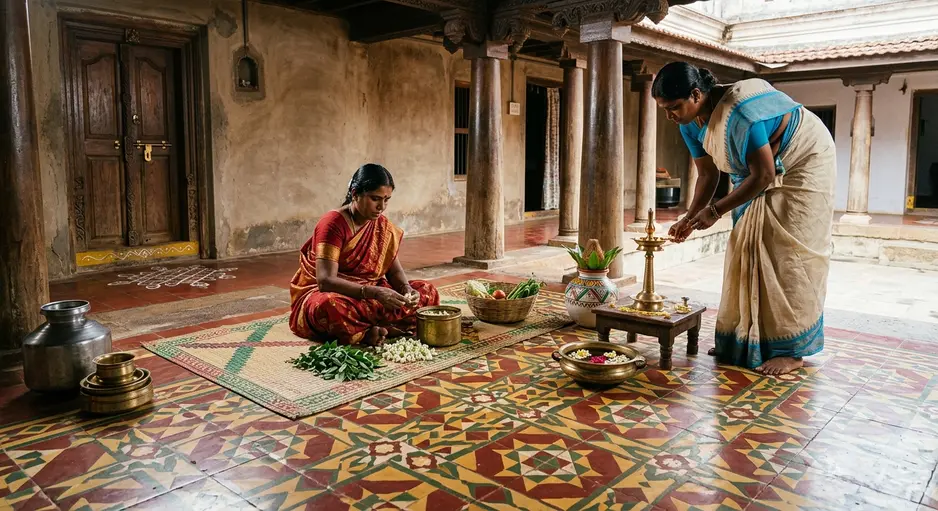
Match the Pattern Scale to the Room
Large motifs need enough floor area to show their full repeat. They are often suited to spacious halls and courtyards. Smaller motifs can work better in passages, bedrooms and compact pooja rooms.
Test the repeat with a digital layout or a dry arrangement of sample tiles. Also check how the design meets walls, doorways and fixed furniture.
Build a Balanced Colour Palette
Start with one base colour, add one or two supporting shades, and finish with a restrained border or transition tile. Deep red, mustard, blue, green, black and cream are familiar choices, but there is no need to follow a fixed historic palette.
For a calm heritage interior design, repeat one tile colour in the woodwork, wall accents or soft furnishings. This helps the floor feel connected to the rest of the room.
Check Samples, Batches and Technical Details
Before ordering traditional floor tiles, ask for clear product and application information. Important points include:
- Tile dimensions and thickness
- Expected colour and pattern variation
- Recommended indoor, outdoor or semi-outdoor use
- Available water absorption or test information
- Sealing, polishing and cleaning instructions
- Production lead time and replacement availability
Order about 10% extra for normal cutting and future repairs. Complex borders, diagonal layouts and limited batches may require a larger allowance.
How Can You Identify Quality Craftsmanship?
Look for clear motifs with the natural character expected from manual production. Tiles should have consistent thickness within the supplier’s stated tolerances. A dependable supplier should explain the production origin, likely variation and installation process.
Physical samples, approved batch images and written care guidance are useful trust signals. Be cautious when a seller describes every defect as proof that the tile is handmade.
How Should Chettinad Tiles Be Installed?
Prepare a Flat and Stable Base
The substrate should be level, strong and free from unresolved dampness or movement. Structural cracks and moisture problems must be addressed before work starts. Use an installer who has experience with cement tiles or handmade tiles.
Dry-Lay the Complete Pattern
Open several boxes and inspect the tiles before fixing begins. Blend small shade variations across the room rather than placing similar shades in separate patches.
Mark centre lines, borders, thresholds and pattern direction. Once the arrangement is approved, photograph it so the installer has a clear reference during the work.
Follow Product-Specific Instructions
Use the bedding material, adhesive and grout recommended for the chosen product. Advice about soaking, sealing and polishing can vary by construction, so avoid applying one universal method to all Chettinad tile designs.
Adhesive and grout should not be allowed to dry on the decorative face. Confirm the finished floor height in advance, especially where the tiles meet timber thresholds, stone slabs or floors in adjoining rooms.
Seal and Protect the New Floor
Apply the supplier-recommended sealer when required. During the remaining building work, protect the surface from paint, dust, chemicals and heavy traffic. Final treatment should begin only after the stated curing period.
Are Chettinad Tiles Easy to Maintain?
Routine Cleaning
Sweep or vacuum loose grit regularly because abrasive particles can wear the surface. Use a pH-neutral cleaner when recommended, and wipe up coffee, oil, turmeric and acidic spills without delay.
Avoid harsh acids, bleach and aggressive scrubbing unless the tile supplier has approved them. Test any new cleaning product on a spare tile or concealed area first.
Preventing Stains and Surface Damage
Place mats at entrances to reduce tracked-in dirt. Felt pads beneath furniture can help prevent scratches. If the floor has been sealed, inspect it over time and arrange resealing according to its condition and the supplier’s guidance.
Are Chettinad Tiles Slippery?
Slip resistance varies with the surface finish, polishing, wear, water and cleaning products. Request suitable slip-test information when selecting tiles for entrances, courtyards or other wet-prone spaces.
Mats and more slip-conscious finishes may provide added protection, but they do not replace proper drainage and careful maintenance.
Buying Chettinad Tiles for Home Interiors
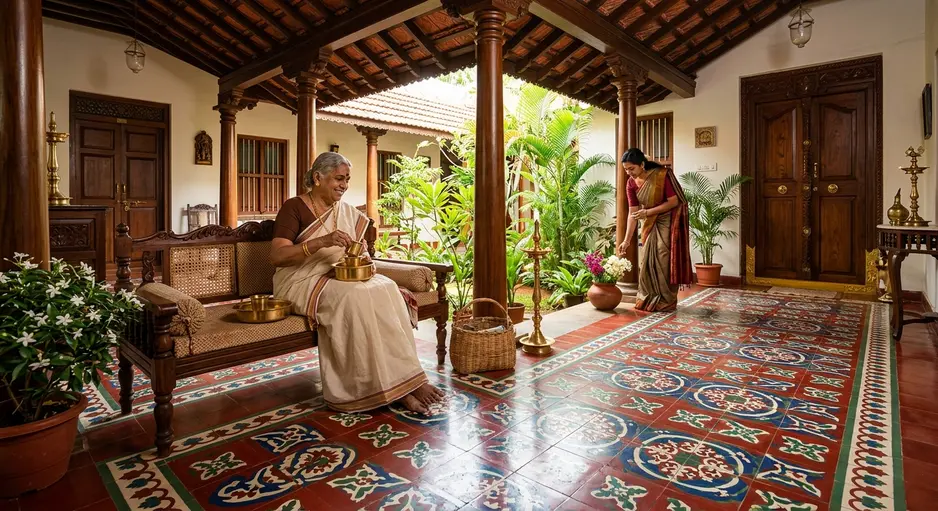
Questions to Ask a Supplier
- Are these authentic Athangudi tiles or Chettinad-inspired cement tiles?
- Where and how are they manufactured?
- Can I review physical samples or batch images?
- What natural variation should I expect?
- Is the tile suitable for my chosen room?
- Does it need sealing, polishing or special care?
- Are installation instructions and test reports available?
- What are the lead time, minimum order and replacement policy?
Compare Total Value, Not Price Per Tile
The full project cost may include border and corner pieces, transport, wastage, skilled installation, sealing and future maintenance. A low tile price may not offer good value if matching replacements or technical guidance are unavailable.
Chettinad Tiles for Traditional South Indian Homes
Bring Traditional Character into Your Home
Chettinad flooring can give a home colour, history and a clear sense of place. The best results come from balancing beauty with practical planning. Check the product’s origin, order samples, review technical details and work with an installer who understands decorative cement tiles.
If you are exploring Chettinad tiles for traditional homes, contact Harsha Tiles to discuss available traditional tile options, samples and application guidance. Confirm all room-specific, installation and maintenance requirements against the current product information before placing your order.
Frequently Asked Questions About Chettinad Tiles
1. What are Chettinad tiles made of?
Many traditional Athangudi-style products use cement-based construction with pigments forming the decorative face. Exact materials and production methods can vary between products. Buyers should review the manufacturer’s current technical information rather than assuming that all patterned tiles have the same composition.
2. Are Chettinad and Athangudi tiles the same?
The terms often overlap in everyday use. However, Athangudi specifically refers to the craft associated with Athangudi in Tamil Nadu’s Chettinad region. Some modern products are Chettinad-inspired decorative cement tiles and are not made through the traditional regional process.
3. Are Chettinad tiles suitable for living rooms?
Yes, they can create a strong focal point in living rooms. Plan the pattern scale, colours and furniture positions together. A patterned centre with a restrained border is a useful approach because it defines the seating area without overwhelming the room.
4. Can Athangudi tiles be used in bathrooms or courtyards?
Only use them when the specific tile and finish are approved for that setting. Wet areas require proper waterproofing, drainage, sealing and slip resistance. Ask for application guidance and relevant technical information before selecting a product for a bathroom or open courtyard.
5. Do Chettinad tiles keep a house cool?
They may feel cool underfoot, especially in interiors that are shaded and well ventilated. However, overall comfort depends on the climate, sunlight, ventilation and full floor construction. Tiles alone cannot guarantee a fixed indoor temperature or cooling effect.


Whatsapp Chatx
Hi! Click one of our representatives below to chat on WhatsApp or send us email to info@harshatiles.in
 |
Mr Saleem +91 82702 80707 |
|
Mr Subramanian +91 96265 57655 |
 Design Your Dream Home