Oct 07, 2026
Connect With Our Team

Athangudi Tiles vs Modern Tiles: Key Differences
Choosing between handcrafted character and factory-made precision is not always easy. Athangudi tiles bring rich colours, artistic patterns, and a strong link to Tamil Nadu’s Chettinad heritage. Modern tiles offer uniform sizes, predictable performance, and a wide choice of finishes.
However, neither option is best for every home. Your decision should reflect the room, design style, installation needs, and expected upkeep. This guide compares Athangudi tiles vs modern tiles across composition, appearance, durability, water absorption, maintenance, installation, and long-term value.
Athangudi Tiles vs Modern Tiles at a Glance
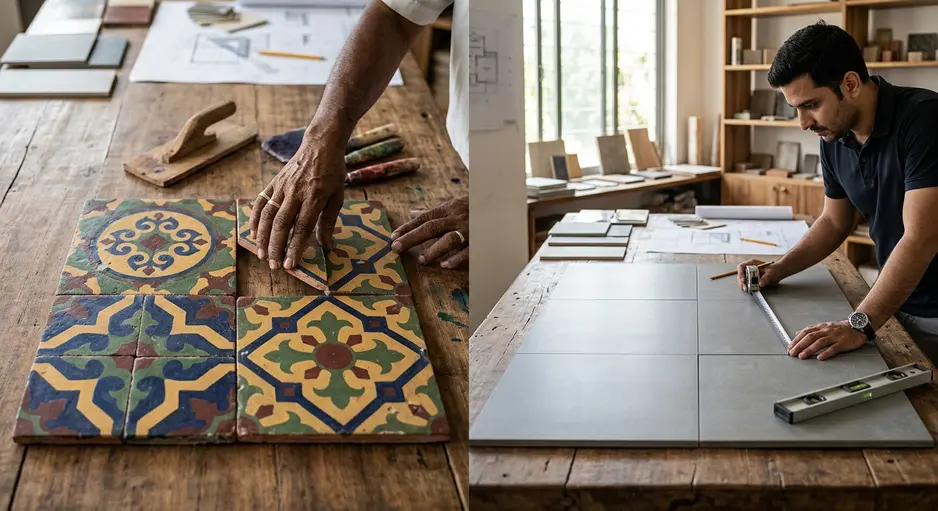
The term “modern tiles” covers several products, including ceramic, porcelain, vitrified, and composite tiles. Their properties vary, so it is important to review the technical details of the exact product you plan to buy.
- Production: Athangudi products involve handmade tile production, while contemporary options are mainly produced by machines.
- Composition: Athangudi tiles commonly use cement, sand, pigments, and related materials. Modern products may use ceramic clay, porcelain bodies, vitrified materials, or composites.
- Finish: Athangudi surfaces can look smooth and naturally lustrous. Modern options may have a glazed tile finish, polished surface, texture, or matte tile finish.
- Appearance: Handmade floors show slight differences in shade and pattern. Factory production provides greater dimensional consistency.
- Designs: Athangudi patterns often include floral, border, and geometric motifs. Contemporary styles include stone, marble, wood, concrete, and terrazzo effects.
- Water absorption: Cement-based products are often more porous. Porcelain and some vitrified options may offer lower absorption.
- Installation: Handmade tiles need careful planning and experienced handling. Standardised tiles are usually easier to plan and align.
- Maintenance: Athangudi floors may need sealing. Many factory-made surfaces are easier to clean, although their grout still needs care.
The most important distinction
This is not simply a choice between old and new. Traditional Athangudi tiles provide individuality, craft value, and visible character. Modern floor tiles offer consistent sizing, repeatable colours, and access to published technical specifications.
Minor colour variation or edge differences in handmade products are not always defects. They are often part of the intended appearance. Buyers who expect a perfectly uniform floor may prefer a machine-made option.
How Are Athangudi and Modern Tiles Made?
Cement-based composition and handmade production
Athangudi tiles are associated with Athangudi and the wider Chettinad region of Tamil Nadu. In a typical process, artisans use pigments and moulds to form a decorative face against a smooth surface, often glass. Cement-based backing layers are then added, and the tile is cured rather than fired in a kiln.
Recipes and production methods can differ between workshops. Manual pigment placement and curing may create small changes in shade, surface texture, thickness, and edges. These details give handmade Athangudi tiles their distinctive appearance.
How machine-made tiles achieve consistency
Ceramic and porcelain products are generally pressed into shape and fired at controlled temperatures. Depending on the product, factories may also use glazing, digital printing, polishing, or surface texturing.
Automated production supports calibrated thickness, uniform sizes, repeatable designs, and large manufacturing volumes. It also allows suppliers to classify products using recognised standards, such as ISO 13006 or applicable BIS requirements. Always ask for product-specific test information rather than relying on the tile category alone.
Glazed finish versus natural lustre
A shiny Athangudi surface should not automatically be called ceramic glaze. Modern glazed tiles usually receive a surface layer that is fused during kiln firing. Athangudi floors may gain their smooth appearance from the production, curing, finishing, or polishing process. Confirm the exact treatment with the supplier.
Which Tile Offers Better Designs and Aesthetics?
Athangudi designs for traditional interiors
Athangudi tile designs often feature flowers, leaves, decorative borders, repeating shapes, and strong central motifs. Rich reds, blues, greens, yellows, black, and off-white are common visual choices. Slight shade changes make the patterned tile surfaces feel personal rather than mass-produced.
These floors suit Chettinad-inspired homes, heritage renovations, courtyards, entrance halls, and eclectic interiors. They are also effective in boutique hospitality spaces where the floor is meant to become a focal point. With age and proper care, the surface may develop a natural patina.
Modern designs for contemporary interiors
Modern tile designs provide a much wider range of visual effects. Popular choices include marble-look slabs, wood-look planks, terrazzo patterns, concrete effects, neutral stone finishes, and simple geometric tile designs. Large-format products can also reduce the number of visible grout lines.
These options work well with contemporary interior aesthetics, open floor plans, and simple colour schemes. Buyers can select polished, textured, or matte surfaces based on the room and desired look.
Can Athangudi tiles work in a modern home?
Yes. Athangudi tiles for interiors do not need to be limited to heritage properties. A monochrome pattern can add depth to a minimalist foyer, while a decorative inset can define a dining area. Borders and feature strips also work well within otherwise neutral flooring.
For a balanced result, choose one dominant pattern and keep nearby walls, furniture, and fabrics quieter. This lets the floor stand out without making the space feel busy.
Are Athangudi Tiles More Durable Than Modern Tiles?
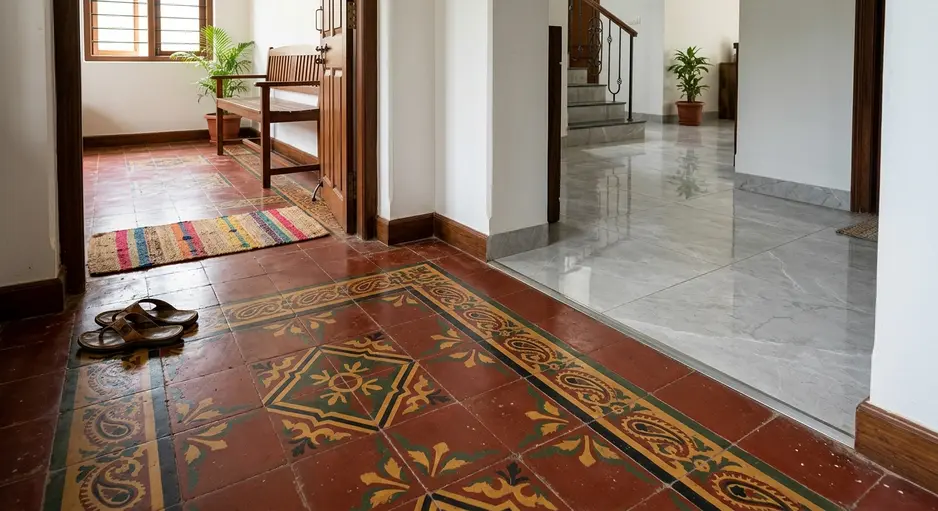
Durability and wear resistance
Both options can provide years of service when they are correctly selected, installed, and maintained. The performance of Athangudi tile flooring depends on the cement mix, curing quality, surface treatment, subfloor, installer skill, and regular care.
Porcelain and vitrified products tend to offer more standardised data for strength, abrasion, dimensions, and recommended applications. That does not mean every modern product is equally durable. Wall tiles, light-duty floor tiles, and commercial-grade products are designed for different levels of use.
Water absorption and stain resistance
Cement-based tiles are porous and should not be assumed to be waterproof. Sealing may reduce staining and moisture entry, but the result depends on the product and sealer. Request tested water absorption information and written care instructions before ordering.
Porcelain is classified by very low water absorption under applicable tile standards. Ceramic products can fall into different absorption groups, while vitrified products also vary by specification. No single value should be applied to all modern tiles.
Surface texture, scratches, and visible wear
Handmade surfaces may develop a patina that adds to their appeal. Polished modern flooring can show scratches, dust, or marks more clearly. It may also become slippery in certain wet conditions.
A matte tile finish can hide everyday marks, but “matte” does not automatically mean slip-resistant. For bathrooms, entrances, and wet utility areas, check a recognised slip-performance rating for the specific product.
What Are the Installation and Maintenance Differences?
Athangudi installation requirements
Athangudi floor tiles need careful handling because minor size and shade differences may occur. Patterned layouts and borders should be planned before any tile is fixed.
- Inspect the full order and dry-lay key sections.
- Blend tiles from different boxes or batches to spread colour variation evenly.
- Plan motifs, borders, corners, and centre lines in advance.
- Hire an installer familiar with handmade cement tiles.
- Keep the tile face clean while laying and grouting.
- Follow the supplier’s instructions for curing, polishing, and sealing.
- Test cleaners and sealers on a spare piece before wider use.
Small dimensional differences may require joint adjustments. Rushing the layout can result in broken patterns or uneven borders that are hard to correct later.
Installing modern floor tiles
Machine made tiles generally simplify modular planning because their sizes and thicknesses are more consistent. Even so, they are not installation-proof. A poor substrate or incomplete adhesive coverage can still lead to cracking, hollow areas, or loose tiles.
Large-format contemporary floor tiles require a particularly flat base, correct trowel selection, suitable adhesive, movement joints, and skilled handling. Installation guidance should follow the product supplier and recognised industry practices.
Maintenance and cleaning
For Athangudi flooring, remove grit often and use a pH-neutral cleaner. Avoid acidic chemicals unless the supplier has approved them. Resealing may be needed at intervals based on traffic, finish, and product guidance.
Modern tile flooring is often simple to clean, but grout lines still collect dirt. Avoid abrasive tools on polished surfaces, and use suitable cleaners for textured or anti-slip products. Always follow the care instructions for the exact finish.
Which Tiles Are Better for Each Room?
Living rooms and entrances
Athangudi tiles for homes can create a memorable living-room floor, border, or foyer. Modern tiles for homes suit large open spaces where visual uniformity is important. For entrances, consider grit, rainwater, foot traffic, and tested slip performance.
Kitchens and dining rooms
Athangudi patterns bring warmth and identity to kitchens and dining areas. Because food, oil, and coloured liquids can stain porous surfaces, suitable sealing and prompt cleaning are important.
Glazed porcelain or vitrified flooring may be the practical choice when low maintenance is the main goal. Check whether a highly polished finish is suitable for areas where spills are common.
Bathrooms and wet areas
Athangudi tiles should not receive a blanket recommendation for showers or wet floors. Confirm their absorption, sealing needs, and slip suitability first. The substrate also needs a properly designed waterproofing system because tile and grout do not replace waterproofing.
Tested matte or textured modern tiles may be easier to specify when wet-area performance is critical. Review the stated application and slip classification rather than judging safety by appearance alone.
Bedrooms, verandas, and outdoor spaces
Bedrooms have relatively low wear, so either option can work well. For verandas and outdoor areas, assess weather exposure, drainage, thermal movement, and slip resistance. Confirm that the chosen product is approved for exterior use; not all Athangudi or modern products are suitable outdoors.
Athangudi vs Contemporary Tiles: How Should You Choose?
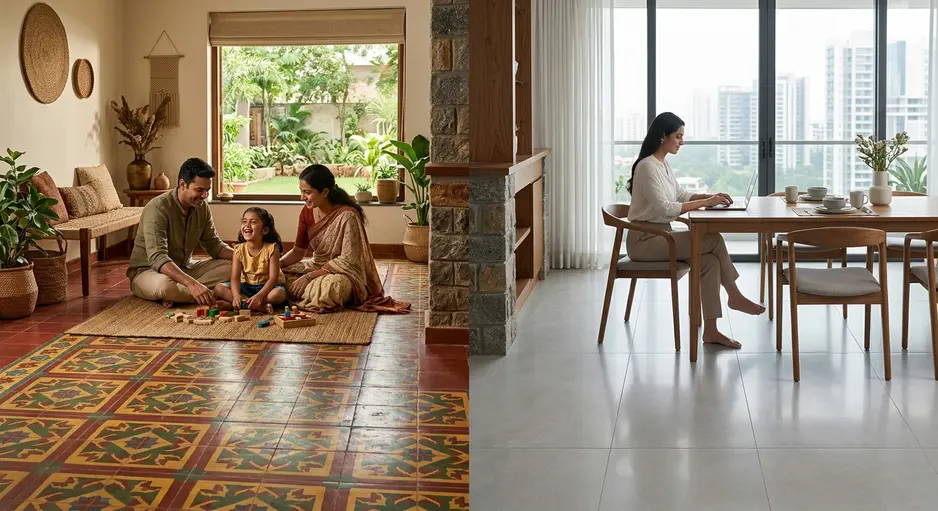
Choose Athangudi tiles if you value
- Handmade craftsmanship and visible individuality
- Decorative or heritage-inspired patterns
- Traditional or eclectic interior design
- Natural differences in colour and surface character
- A statement floor with a strong visual identity
Choose modern tiles if you prioritise
- Consistent dimensions and repeatable shades
- Low-maintenance surface options
- Large-format and minimal designs
- Predictable technical specifications
- Faster sourcing for larger projects
Compare the total project cost
Do not compare the tile price alone. Include freight, breakage allowance, pattern planning, installer labour, adhesive or mortar, grout, subfloor preparation, sealing, polishing, and future maintenance. Replacement availability also matters, especially with handmade patterns or changing factory collections.
Seven questions to ask before ordering
- Is this product recommended for the intended room?
- What is its tested water absorption?
- Does it need sealing, polishing, or special cleaning?
- How much colour and dimensional variation is normal?
- Which installation method should be used?
- Can I review samples or completed project photographs?
- Will matching replacement pieces be available later?
For help comparing patterns, finishes, availability, and intended applications, consult Harsha Tiles before placing your order. Request samples and confirm all technical and care requirements for the product you are considering.
Explore Athangudi Tiles & Modern Tiles
Make the Choice That Fits Your Home
The Athangudi tiles vs modern tiles decision comes down to priorities. Choose Athangudi for craft, pattern, heritage character, and a floor that feels unique. Choose modern flooring for consistency, broad technical choices, and simpler routine care.
Before buying, review samples in your actual lighting and confirm the product’s intended use, absorption, slip performance, installation method, and maintenance needs. The right tile is not merely the most attractive option. It is the one that suits the room, installation conditions, lifestyle, and long-term expectations.
Frequently Asked Questions
1. Are Athangudi tiles suitable for modern homes?
Yes. Restrained colours and geometric patterns can complement neutral walls and minimalist furniture. They work well in foyers, dining-room insets, borders, or selected feature areas. Keeping the surrounding materials simple allows the handmade floor to become the main design element.
2. Do Athangudi tiles need sealing?
Many cement-based handmade tiles benefit from sealing because their surfaces can be porous. The requirement depends on the production method and finish. Follow the supplier’s instructions, use a compatible sealer, and test it on a spare tile before treating the entire floor.
3. Are Athangudi tiles waterproof?
They should not automatically be treated as waterproof. Absorption depends on their composition, curing, finishing, and sealing. In bathrooms and other wet areas, a proper waterproofing system is still required beneath the tile and grout.
4. Which lasts longer: Athangudi or modern tiles?
Both can be long-lasting when properly made, installed, and maintained. Porcelain and vitrified products often provide more standardised performance data. Well-made Athangudi floors can also serve a home for years and may develop an appealing patina with age.
5. Why do handmade Athangudi tiles show colour variation?
Variation can result from manual pigment placement, raw materials, curing conditions, and batch differences. It is part of the handcrafted look. Ordering extra pieces and blending tiles from several boxes during installation helps create a more balanced appearance.

Whatsapp Chatx
Hi! Click one of our representatives below to chat on WhatsApp or send us email to info@harshatiles.in
 |
Mr Saleem +91 82702 80707 |
|
Mr Subramanian +91 96265 57655 |
 Design Your Dream Home