Oct 06, 2026
Connect With Our Team

1200×300 mm Tiles for Stairs: Design and Safety Tips
A staircase must look good, but it also needs to feel safe underfoot. That balance can be hard to achieve. The long, narrow shape of 1200×300 mm tiles for stairs suits many steps and may reduce visible grout joints. It can also create a clean, modern finish.
However, tile size alone does not make a staircase safe. Surface grip, edge protection, accurate measurements and correct installation all matter. This guide explains how to compare materials, finishes, nosing options and technical data before choosing tiles for a home or commercial project.
Why Choose 1200×300 mm Tiles for Stairs?
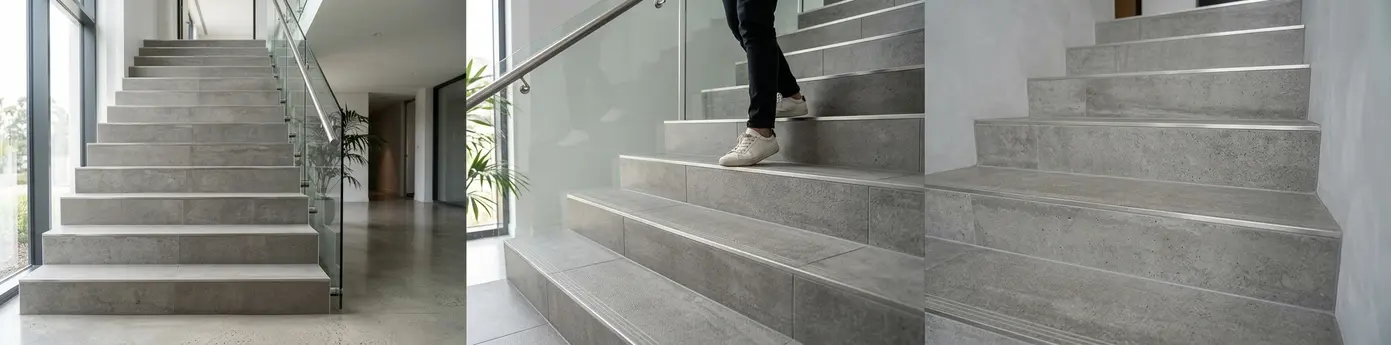
Can one tile cover a complete stair tread?
A 1200×300 mm tile may cover the width of many residential stairs in one piece. Its 300 mm dimension may also suit a common tread depth. This can reduce joints and give each step a smooth, continuous appearance.
Still, every staircase is different. Finished dimensions can change due to plaster, wall angles, adhesive thickness, nosing and construction tolerances. Some tiles also have actual dimensions that differ slightly from their nominal size. Measure each step before ordering or cutting.
Do not force a standard tile size onto uneven steps. Cutting every tile to the same dimensions when the masonry varies may result in inconsistent tread depths or riser heights. These differences can increase the risk of trips.
Benefits of large-format stair tiles
- Fewer grout joints across the tread.
- A clean visual flow from one step to the next.
- Easier routine cleaning than layouts made with many small pieces.
- Better pattern continuity for stone, wood and concrete effects.
- Coordinated designs for treads, risers and landings.
Large format stair tiles work especially well on straight, L-shaped and U-shaped staircases. They may be less practical for curved stairs, spiral designs, irregular masonry or flights wider than 1200 mm.
How Do You Select Safe and Durable Stair Tiles?
Compare porcelain and vitrified options
Quality porcelain and vitrified tiles are often dense and have low water absorption. These properties can make them useful in areas exposed to regular foot traffic or occasional moisture. Yet not every product labelled porcelain or vitrified is suitable for stair treads.
When comparing porcelain stair tiles 1200×300 or vitrified stair tiles 1200×300, review the technical sheet. Check the intended application, breaking strength and water absorption. Relevant test information may be reported under the ISO 10545 series. Ceramic tile classification may also refer to EN 14411 or ISO 13006.
Prioritize slip resistance and surface grip
A matte tile finish is often more practical than a highly polished surface on stairs. A textured tile surface may provide added grip in entrances, semi-outdoor spaces and other areas where water or dust may reach the steps.
Ask the supplier for applicable traction or slip-resistance test data. ANSI A326.3 and DIN 51130 are two frameworks seen in technical literature. Their results can help with product evaluation, but no rating makes a floor slip-proof in every setting. Cleaning methods, footwear, contaminants and drainage also affect real-world safety.
Check strength and maintenance properties
Use this checklist when comparing durable tiles for staircases:
- Abrasion resistance suited to the expected foot traffic.
- Scratch resistance for shoes, sand and moving objects.
- Low water absorption for damp or exterior locations.
- Stain resistance for simpler daily maintenance.
- Consistent thickness and rectified tile edges where required.
- Replacement pieces available in the same shade and batch.
Staircase Tile Design Ideas for Treads and Risers
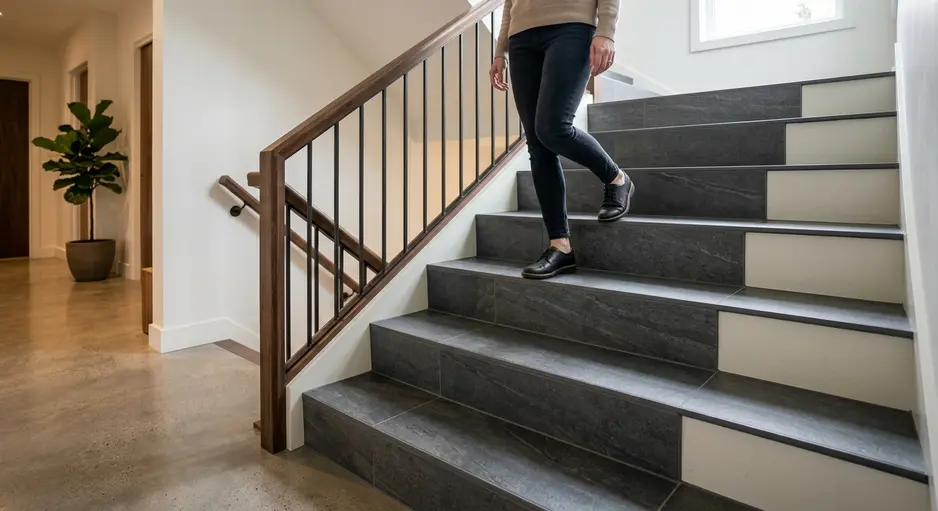
Create a stone, wood or concrete look
Stone-effect tiles can give formal interiors a refined finish. Wood-look designs add warmth without placing timber on each step. Concrete-look and neutral matte tiles suit simple, modern spaces.
Marble-look designs can also create a premium result. However, avoid selecting a highly polished finish for a tread based on appearance alone. If you want a glossy effect, consider using it on tiles for stair risers while choosing a safer surface for the walking area.
Coordinate treads and risers
Matching tiles for stair treads and risers create a solid, monolithic look. For more contrast, combine neutral treads with patterned or lighter risers. Darker treads may hide dust and minor wear, although the chosen pattern should not make the step edge hard to see.
Dry-lay veined or directional designs before cutting. This helps avoid sudden breaks in the pattern. It also makes it easier to connect the stairs with landings and nearby floors.
Use contrast to improve visibility
A contrasting strip or nosing can help users identify where each step ends. Keep the contrast consistent throughout the full flight. Random changes in colour or edge treatment may make the staircase harder to read.
For example, a home may pair wood-look matte treads with plain cream risers. A busy commercial stair may use darker textured treads, simple risers and a clearly visible nosing strip.
What Makes a Tiled Staircase Safer?
Protect step edges with nosing profiles
Stair nosing can protect the front edge from impact while making it easier to see. Depending on the tile system and design, common choices include grooved tile edges, bullnose edges, metal nosing profiles and contrasting anti-slip inserts.
The nosing should suit the tile thickness and adhesive bed. It should not create a sharp edge, loose section or excessive projection that becomes a trip point. Check whether the profile is suitable for the expected traffic and environment.
Keep tread and riser dimensions consistent
Uneven step heights are a serious trip risk. Tile and adhesive add thickness, so these layers must be included when planning the staircase. Pay close attention to the first and last risers, where mistakes often become most noticeable.
Good stair tread safety begins before the tiles are fixed. A qualified installer should confirm the finished rise, tread depth, edge position and level of every step.
Match the finish to the environment
- Dry residential interiors: Choose a comfortable matte finish with suitable grip.
- Entrances and semi-outdoor stairs: Consider more texture and verified wet traction.
- Commercial buildings: Assess traffic, cleaning routines, edge impact and accessibility needs.
- Outdoor stairs: Plan for drainage, weather exposure and temperature movement.
Stairway installation requirements vary by location and building use. Confirm dimensions, handrails, nosing and accessibility rules under the National Building Code of India and applicable local regulations. Public or high-traffic stairs should be reviewed by an architect, engineer or other qualified professional.
How Are 1200×300 mm Stair Tiles Installed?
Measure every tread and riser
Never assume all masonry steps are identical. Measure the width, depth and rise of each one. Record wall irregularities and the planned edge position. A clear cutting schedule can reduce waste and prevent rushed decisions during installation.
Dry-lay the tiles before fixing them. Check colour, grain, shade and pattern direction. If the flight includes a landing, plan it at the same time so joints and visual lines do not end in awkward places.
Prepare a flat and stable base
The substrate should be sound, clean and properly formed. Repair cracks, hollows and loose areas before tiling. Remove dust and other material that may weaken the bond.
Adhesive should not be used to correct major variations in the staircase. Poor preparation can leave weak spots beneath a tile, which may lead to movement, cracking or debonding.
Plan tile cutting and fitting
Professional cutting equipment is important for long tiles. Plan cuts so narrow pieces do not sit at exposed edges. Any visible cut edge should be finished or protected with a compatible profile.
Do not install tiles edge-to-edge. Follow the tile and adhesive system guidance for grout joints, perimeter gaps and movement joints. Rectified tile edges allow a neat layout, but they do not remove the need for joints.
Use full adhesive coverage
Select an adhesive that suits the substrate, tile type and location. Apply it according to the manufacturer’s instructions. Full support is vital beneath the tread and nosing area because voids near an exposed edge can make impact damage more likely.
Allow the system to cure before allowing foot traffic. Grouting too early or opening the staircase before the adhesive has set may weaken the installation.
Common mistakes to avoid
- Using polished tiles on wet or exterior stairs.
- Ignoring the finished height of each riser.
- Leaving hollow areas or unsupported overhangs.
- Keeping sharp, unfinished edges exposed.
- Failing to align directional patterns.
- Walking on or grouting the tiles too soon.
Residential vs Commercial Stair Tiles
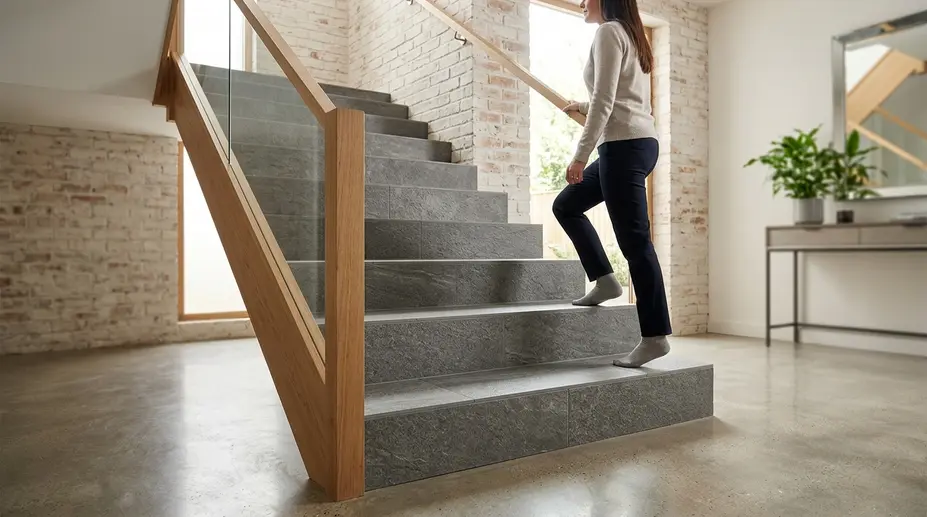
Stair tiles for residential projects
Homes often place more weight on colour, comfort and easy cleaning. Think about who uses the stairs, including children, older adults and pets. A visible step edge and practical surface grip can be more valuable than a glossy finish.
Order spare pieces for future repairs. Matching the same shade years later may be difficult, even when the product name remains available.
Stair tiles for commercial buildings
Commercial stairs may face heavier traffic, frequent cleaning and greater edge impact. Buyers should compare abrasion resistance, surface grip, strength and compatibility with cleaning products. Clear edge contrast may also be required for accessibility or local code compliance.
Before approving 1200×300 staircase tiles, request a sample and review it under expected wet and dry conditions. Confirm that technical documents apply to the exact product and finish being ordered.
Buyer’s checklist before ordering
- Confirm nominal and actual tile dimensions.
- Check thickness, calibration and edge finish.
- Ask whether the product is recommended for stair treads.
- Review available slip, strength and water absorption data.
- Confirm shade, batch quantity and lead time.
- Add an allowance for cuts, breakage and future replacement.
Buyers can consult Harsha Tiles about available 1200×300 mm designs, finishes, samples and project quantities. Request current product specifications before making a final choice for residential or commercial use.
Choose Stair Tiles with Safety in Mind
The best staircase combines reliable tile quality, suitable surface grip, visible edges and accurate installation. Compare technical data rather than choosing by colour alone. Before finalizing 1200×300 mm stair tiles, verify every step dimension, plan the nosing and confirm local code requirements.
Explore suitable options from Harsha Tiles and request current product details or samples for your project. A careful review before ordering can lead to a cleaner design, fewer fitting issues and a safer finished staircase.

Whatsapp Chatx
Hi! Click one of our representatives below to chat on WhatsApp or send us email to info@harshatiles.in
 |
Mr Saleem +91 82702 80707 |
|
Mr Subramanian +91 96265 57655 |
 Design Your Dream Home